

GLUCOGOLD & CUSHGOLD
Targeted support for EMS and Cushing (PPID)
From one-sided support to a broader metabolic and neuroendocrine approach

With GLUCOGOLD and CUSHGOLD, GOLDMEDICS introduces two new targeted supplements for horses with EMS (Equine Metabolic Syndrome) and Cushing (PPID). Although EMS and Cushing are two different conditions, they can overlap metabolically. Glucose and insulin regulation plays a particularly important role.
That is why GLUCOGOLD and CUSHGOLD take a broader approach: rather than supporting one isolated process, they take the entire metabolic network into account. With CUSHGOLD, targeted support of the neuroendocrine balance is added as well.
|
Which supplement for which situation? EMS without Cushing (PPID) → GLUCOGOLD |
GLUCOGOLD: a broader metabolic approach to EMS
EMS: more than a horse that gains weight easily
EMS (Equine Metabolic Syndrome) is a metabolic disorder in which insulin dysregulation plays a central role. The body no longer responds to insulin normally, and after consuming sugars and starch the insulin level may rise more sharply and remain elevated for longer than in a healthy horse. Horses with EMS are often easy keepers and may develop typical regional fat deposits, for example along the crest of the neck, shoulders or tailhead. Recurrent laminitis can also be an important sign. However, not every horse with EMS is overweight. Horses with a normal or lean appearance can also have insulin dysregulation. Certain outward signs may be a reason to carry out further testing, but they are not sufficient for a diagnosis. Do you suspect EMS? Always have your horse examined and diagnosed by your veterinarian.
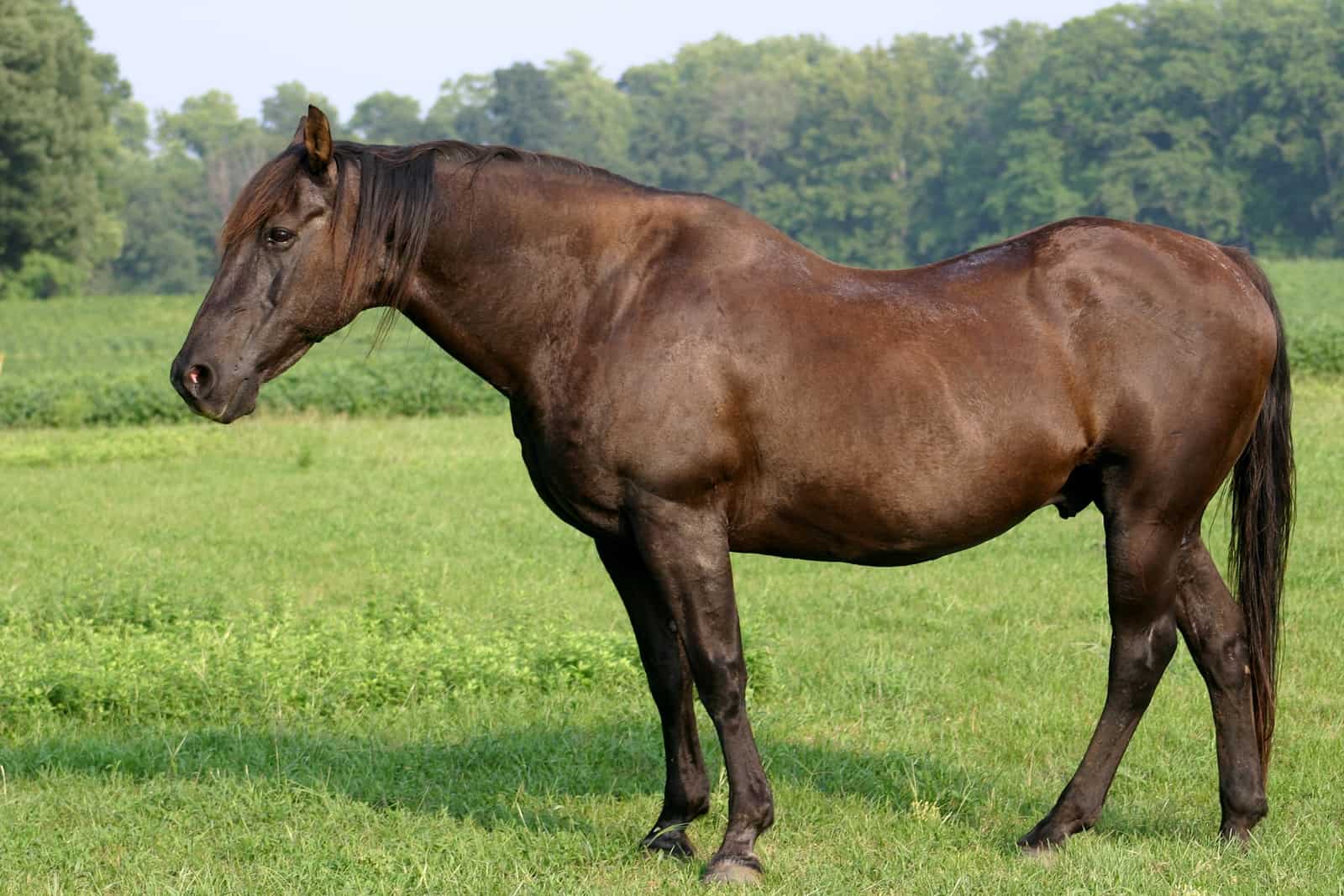
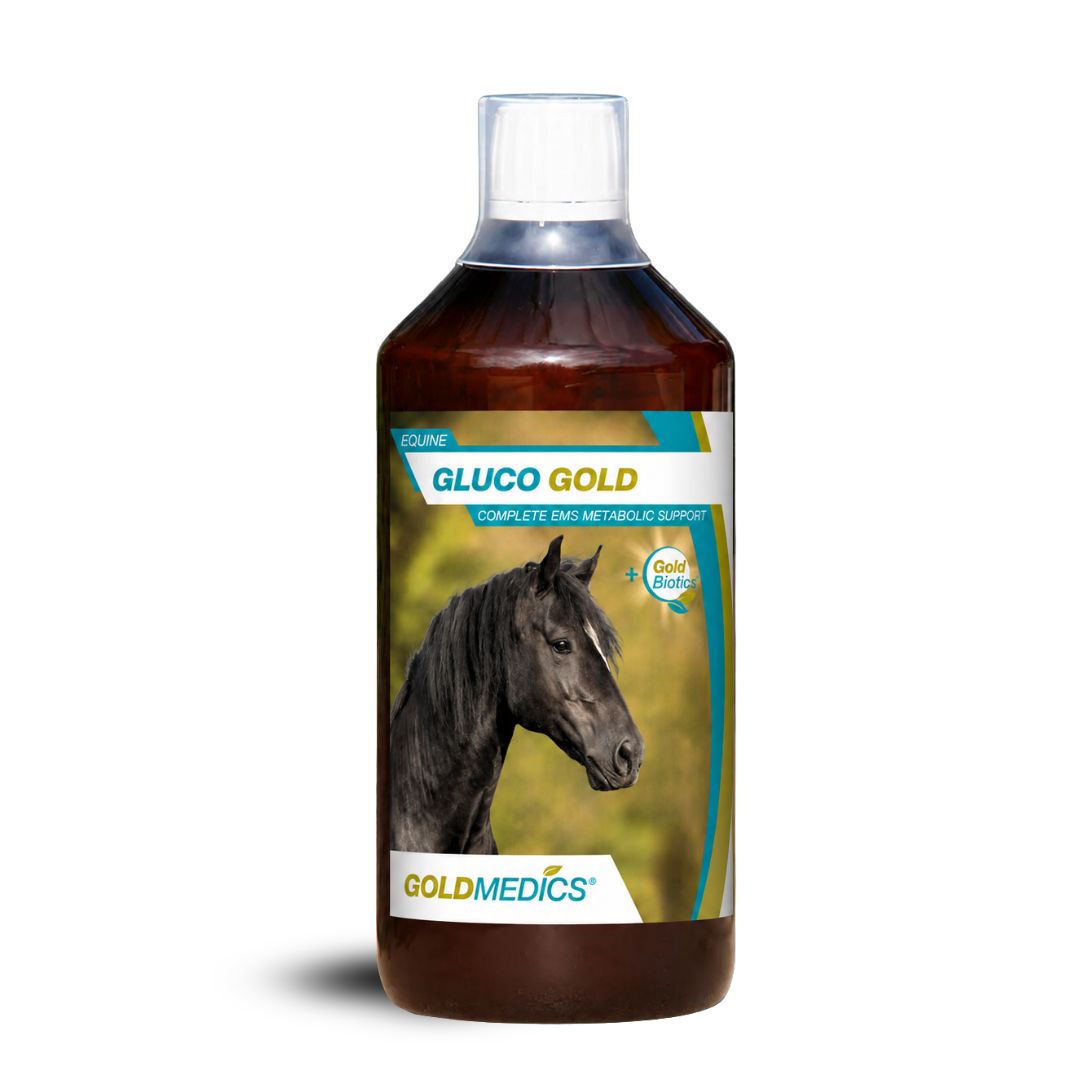
Many existing EMS supplements focus mainly on one or more steps in carbohydrate metabolism, such as glucose absorption or support of insulin sensitivity. GLUCOGOLD goes further.
The formula supports several parts of the metabolic network:
- a controlled postprandial glucose and insulin response;
- insulin sensitivity and glucose utilisation;
- the gut microbiome via GoldBiotics® ICU;
- the broader metabolic network, including the interaction between the gut, liver and adipose tissue.
The gut microbiome as part of metabolic health
Part of the carbohydrates in the ration reaches the large intestine, where bacteria ferment them and produce, among other things, short-chain fatty acids (SCFAs). These metabolites are not only important for gut health, but also form part of the communication between the gut and metabolism. That is why GLUCOGOLD contains GoldBiotics® ICU, GOLDMEDICS’ innovative microbiome concept.
The formula also combines several highly standardised plant extracts, including:
- Morus alba
- Gymnema sylvestre
- Momordica charantia
- Pterocarpus marsupium
- Cinnamomum spp.
- Trigonella foenum-graecum
- piperine
- natural astaxanthin, zinc and GoldBiotics® ICU.
Where possible, ingredients were selected for which research in horses is already available. For the other extracts, the formulation was based on the best available scientific evidence.
CUSHGOLD: neuroendocrine and metabolic support
Cushing (PPID): more than just an abnormal coat
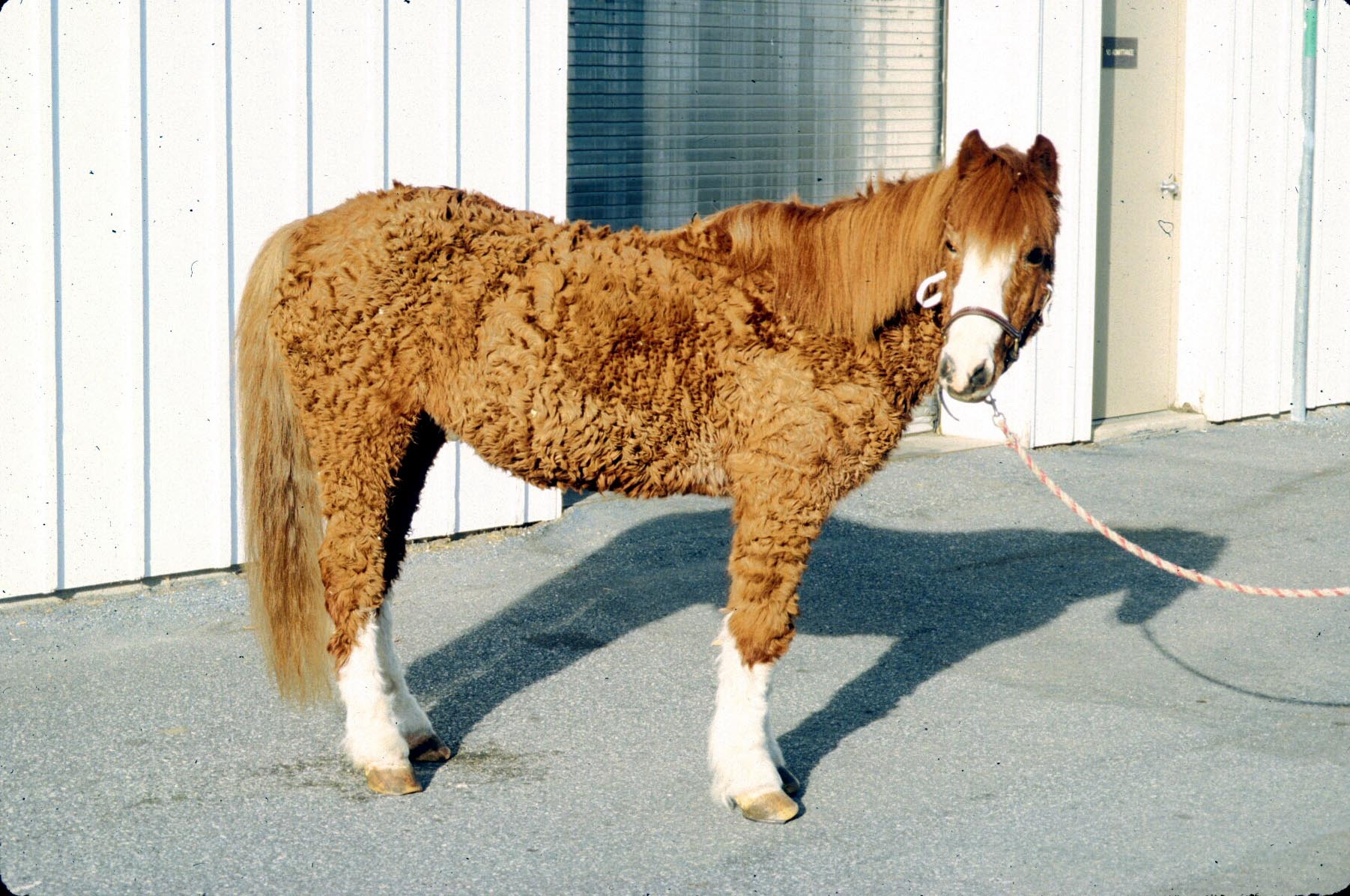
What many horse owners know as Cushing is officially called PPID – Pituitary Pars Intermedia Dysfunction. PPID is a condition in which normal neuroendocrine regulation becomes disrupted and it occurs mainly in older horses and ponies. One of the best-known signs is a long or sometimes curly coat that is difficult to shed, but other signs may also occur, such as:
- loss of muscle mass;
- altered fat distribution;
- reduced energy;
- increased drinking and urination;
- excessive sweating;
- an increased risk of laminitis.
Not every horse shows the same symptoms and, especially in the early stages, changes can be subtle. Here too, outward signs alone are never sufficient to diagnose Cushing (PPID). Always have any suspicion examined and diagnosed by your veterinarian.
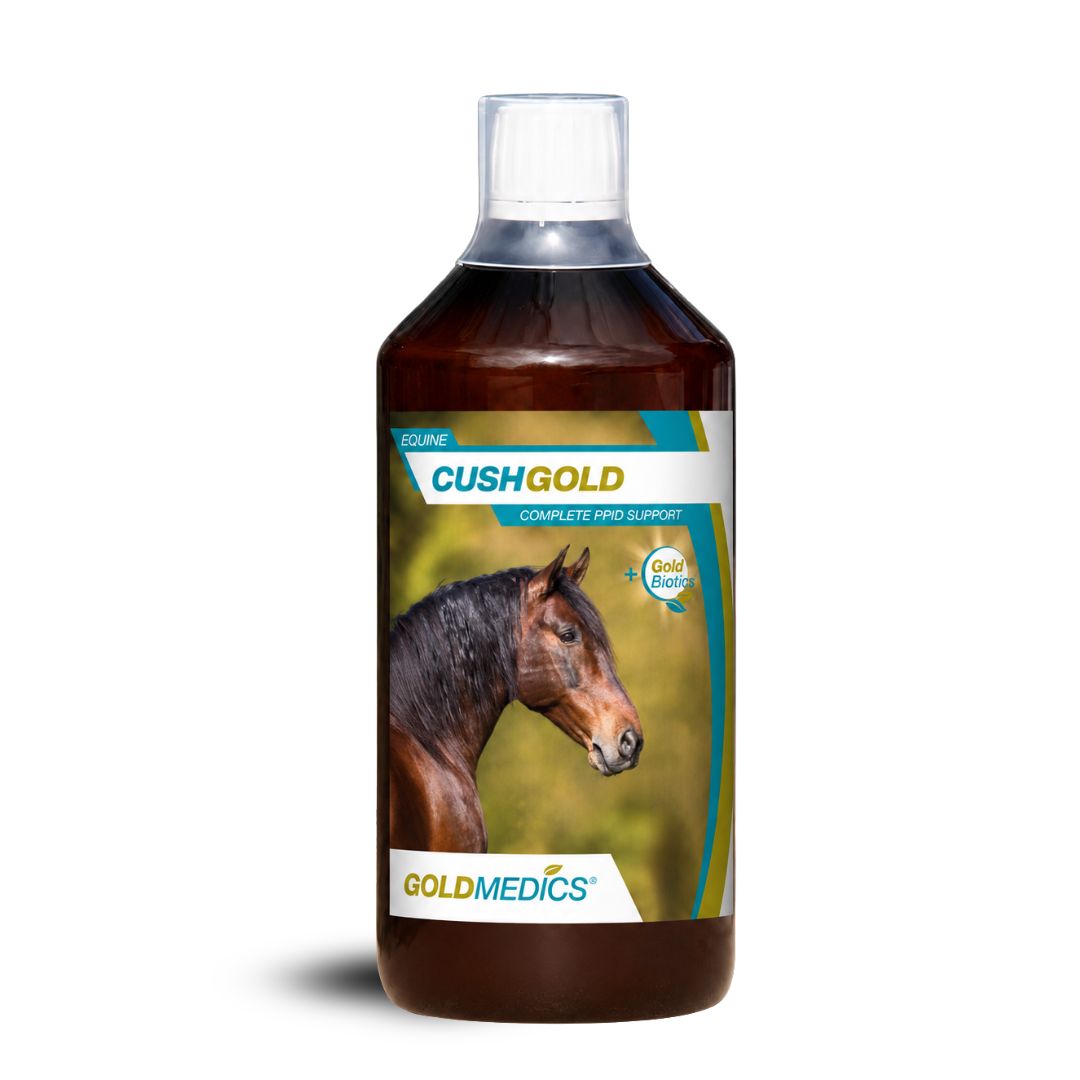
Many nutritional supplements for horses with Cushing are built mainly around Vitex agnus-castus, better known as chaste tree. CUSHGOLD takes a broader approach. PPID begins with changes in neuroendocrine regulation, but its effects can extend further. In some horses, glucose and insulin regulation is also disrupted.
That is why CUSHGOLD combines:
- Vitex agnus-castus to support neuroendocrine balance;
- support of glucose and insulin regulation;
- GoldBiotics® ICU to support the gut microbiome;
- support of the complete neuroendocrine and metabolic network.
In addition to Vitex, CUSHGOLD contains GoldBiotics® ICU. Not one ingredient and not one mechanism of action, but integrated support for the horse.
|
What about pergolide? Pergolide is the standard medical treatment for horses with PPID. CUSHGOLD is a nutritional supplement and does not replace veterinary diagnosis, follow-up or prescribed treatment. The formula was developed as complementary nutritional support for horses that are treated with or without pergolide. |
Which supplement should you choose and when?
The choice between the two formulas is simple:
EMS without Cushing (PPID) → GLUCOGOLD
Cushing (PPID) without EMS → CUSHGOLD
Cushing (PPID) + EMS → CUSHGOLD
Does your horse have both Cushing and EMS? In that case, there is no need to combine both supplements.
With the exception of Pterocarpus marsupium and piperine, CUSHGOLD also contains the EMS-targeted ingredients found in GLUCOGOLD. In this way, CUSHGOLD combines neuroendocrine support for PPID with support of glucose and insulin regulation.
Natural Vitamin E remains important
GLUCOGOLD and CUSHGOLD should never be considered separately from the overall management of a horse with EMS or Cushing.
Appropriate feeding and ration management low in starch + sugar, weight control where necessary, suitable exercise and the other recommended management measures remain important.
In horses with EMS and PPID, a higher dose of natural Vitamin E also remains important.
GLUCOGOLD and CUSHGOLD therefore do not replace this additional Vitamin E support.
View VITA E GOLD and VITA E PLATINUM
GLUCOGOLD & CUSHGOLD at a glance
|
For EMS |
For Cushing (PPID), with or without EMS |
|
Supports glucose and insulin regulation, insulin sensitivity, the gut microbiome and the broader metabolic network. |
Combines support of neuroendocrine balance with support of glucose and insulin regulation, the gut microbiome and the broader metabolic network. |
More information about GLUCOGOLD | More information about CUSHGOLD
|
Important for horse owners Do you recognise possible signs of EMS or Cushing in your horse? Always have your horse examined and diagnosed by your veterinarian first. GLUCOGOLD and CUSHGOLD are available exclusively through your veterinarian or via the official GOLDMEDICS website. |
Do you have questions about GLUCOGOLD, CUSHGOLD or which supplement is most suitable for your horse?
Please do not hesitate to contact us. Our team will be happy to help.
info@goldmedics.com | +32 (0)495 596 531
Scientific references
- Whitfield-Cargile C, Coleman M, Hart K, et al. (2026). Evaluation of the tolerance and effects of 1-deoxynojirimycin on insulin and glucose dynamics in healthy horses and horses at risk for insulin dysregulation. Journal of Veterinary Internal Medicine, 40(2), aalag074. DOI: 10.1093/jvimsj/aalag074.
- de Laat MA, Kheder MH, Pollitt CC, Sillence MN. (2018). Sweet taste receptor inhibitors: Potential treatment for equine insulin dysregulation. PLOS ONE, 13(6), e0200070. DOI: 10.1371/journal.pone.0200070.
- Menzies-Gow NJ, et al. (2024). BEVA primary care clinical guidelines: Diagnosis and management of equine pituitary pars intermedia dysfunction. Equine Veterinary Journal, 56(2), 220–242. DOI: 10.1111/evj.14009.
- McFarlane D, Dybdal N, Donaldson MT, Miller L, Cribb AE. (2005). Nitration and increased alpha-synuclein expression associated with dopaminergic neurodegeneration in equine pituitary pars intermedia dysfunction. Journal of Neuroendocrinology, 17(2), 73–80.
- Tatum RC, McGowan CM, Ireland JL. (2020). Efficacy of pergolide for the management of equine pituitary pars intermedia dysfunction: A systematic review. The Veterinary Journal, 266, 105562.
- Julliand V, Grimm P. (2016). The microbiome of the horse hindgut: History and current knowledge. Journal of Animal Science, 94(6), 2262–2274.